Stress and Burnout: How to Recover Your Balance
Quick answer
Stress is your body's response to pressure; burnout is what happens when that response never switches off. Recovery starts with regulating your nervous system — through rest, boundaries and small consistent practices — not with pushing harder.

Stress is your body's natural response to pressure. Burnout is what happens when that response never gets to switch off. Both are common — and both respond remarkably well to small, consistent changes.
Stress vs. burnout: knowing the difference
Stress usually has a clear cause and eases when the pressure does. Burnout is more gradual: a slow drain of energy, motivation and care that remains even after rest. Common signs include exhaustion that sleep doesn't fix, cynicism about work or life, feeling ineffective, and withdrawing from people and things you used to enjoy.
What happens in your body
When your nervous system stays in "alert mode" for weeks or months, it affects sleep, digestion, concentration, immunity and mood. Recovery isn't just about relaxing once — it's about regularly signalling to your body that it is safe to power down.
Practices that help most
- Regulate first, reflect second. Before problem-solving, calm the body: slow breathing, a walk, a warm shower. A settled nervous system thinks more clearly.
- Try extended exhale breathing. Inhale for 4 counts, exhale for 6–8. Ten rounds, twice a day. The long exhale activates the body's natural relaxation response.
- Protect one non-negotiable recovery block daily. Not leftover time — a scheduled 30 minutes that belongs to you.
- Move your body. Gentle, regular movement (walking, yoga, swimming) is one of the most reliable stress regulators we know.
- Revisit boundaries. Burnout often follows chronic over-commitment. Practise one sentence this week: "I can't take that on right now."
Try this: the energy audit
For one week, jot down each activity and mark whether it gives or drains energy. At week's end, look for one drainer you can reduce, and one giver you can grow. Small adjustments, repeated, change everything.
Rest is a skill
Real recovery is more than collapsing in front of a screen. It includes active rest (movement, nature, hobbies) and still rest (breathwork, meditation, sleep hygiene). Most people need more of both.
When professional help may be appropriate
See a doctor or licensed mental-health professional if exhaustion persists despite rest, if you experience panic attacks, persistent low mood or hopelessness, if you rely on alcohol or other substances to cope, or if burnout is affecting your health or ability to function. Clinical care and wellness practices work best together — one treats, one supports.
Where Metta People can help
Our Breathwork, Yoga & Movement and Somatic & Embodiment facilitators offer nervous-system-friendly sessions designed for exactly this kind of recovery. Explore our facilitators to find a practice that helps your body remember how to rest.
Prefer to read offline? Download this guide as a PDF.
Sources & References
- Burnout as an occupational phenomenon (ICD-11) — World Health Organization
- Stress: research and coping resources — American Psychological Association
Support that may complement this guide
These kinds of Metta People facilitators, sessions, circles and programs can gently support what you're going through — alongside, never instead of, professional care when it's needed.
Related Wellbeing Guides
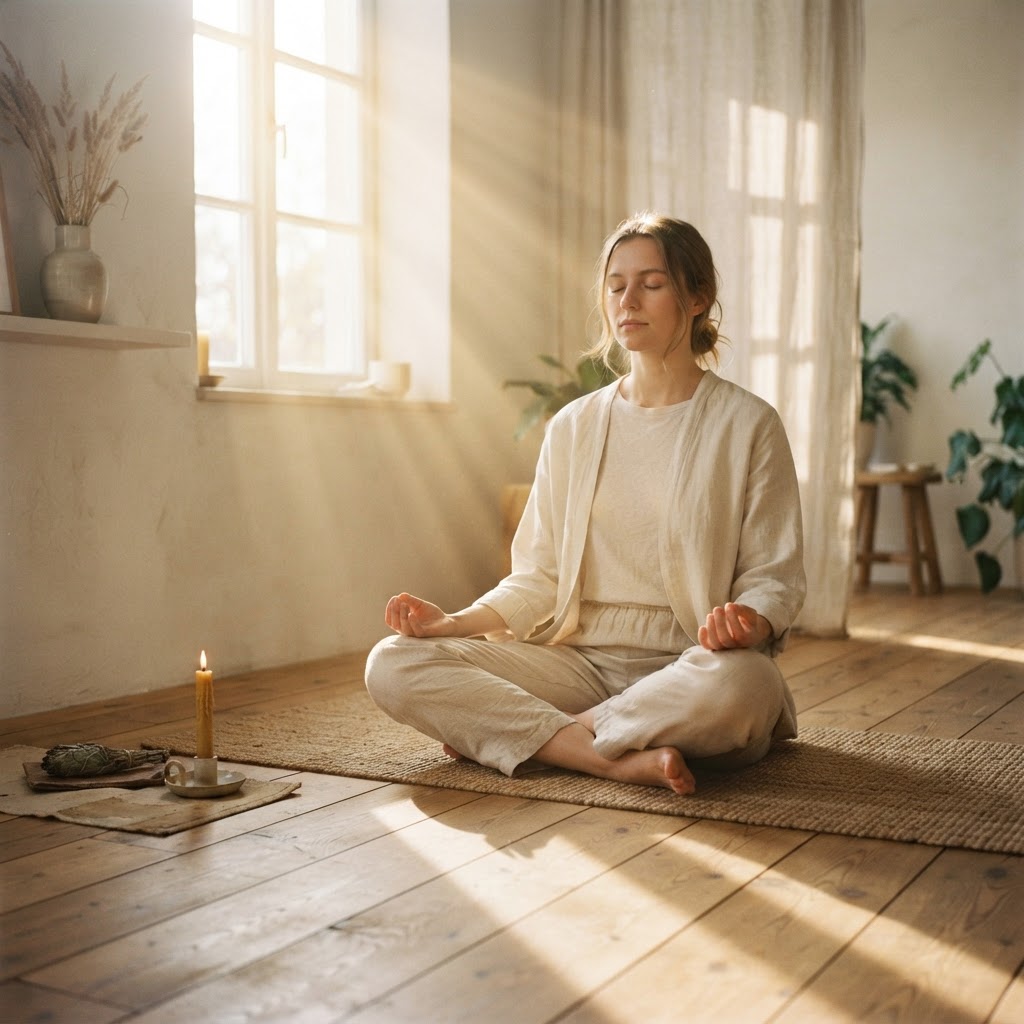

Find someone who fits what you're going through
Tell our Mettia concierge what you're experiencing, and it will gently match you with facilitators, circles and programs suited to your journey — no pressure, no diagnosis, just the right kind of human support.
Find my match