Mindfulness and Meditation: A Practical Beginner's Guide
Quick answer
Mindfulness is a trainable skill, not a talent: noticing what's happening, on purpose, without beating yourself up. Three minutes a day, done daily, genuinely changes how you respond to life.
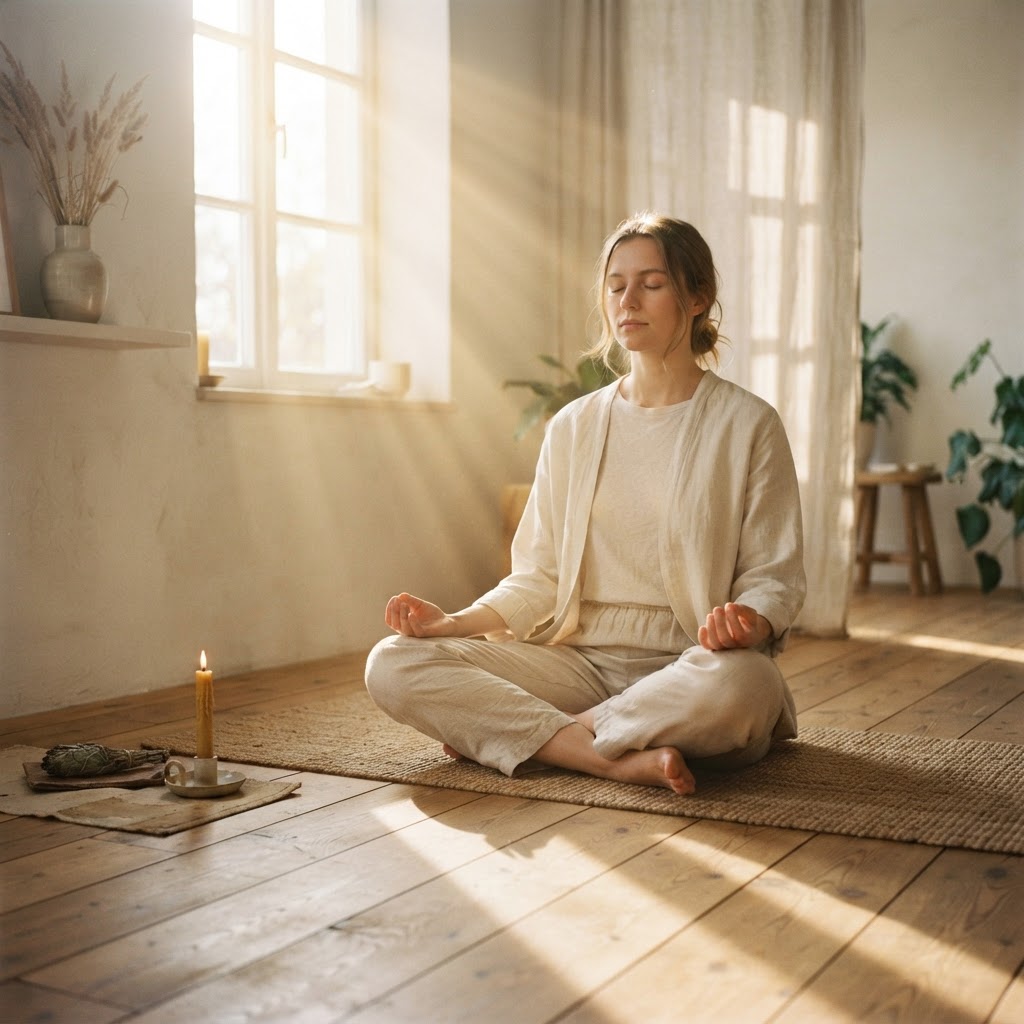
Mindfulness is not about emptying your mind or achieving a special state. It's the trainable skill of noticing what's actually happening — inside and around you — with a little more clarity and a little more kindness.
What the practice actually is
Meditation is the formal exercise; mindfulness is the quality of attention it develops. You sit, you choose an anchor (usually the breath), and every time the mind wanders — which it will, constantly — you gently begin again. Each "beginning again" is the practice, not a failure of it. Research links regular mindfulness practice with reduced stress reactivity, improved focus, better sleep, and greater emotional balance.
A realistic first month
- Week 1 — 3 minutes a day. Sit comfortably, follow the breath. That's all. Tiny and daily beats long and rare.
- Week 2 — 5 minutes. Add a body scan: feet, legs, hands, shoulders, face. Notice sensation without changing anything.
- Week 3 — 8 minutes. Practice labelling: when a thought or feeling appears, silently name it — "planning", "worrying", "itching" — and return to the breath.
- Week 4 — 10 minutes. Alternate days: breath focus one day, open awareness (just noticing whatever arises) the next.
Common experiences (all normal)
- "My mind is too busy." Every mind is. You're not doing it wrong; you're doing it.
- "I fall asleep." Try sitting upright, eyes half-open, or practice earlier in the day.
- "I don't feel anything happening." Benefits are usually noticed in life — a slightly longer fuse, a small gap before reacting — not on the cushion.
Bringing mindfulness off the cushion
- One mindful activity a day. Choose something routine — tea, dishes, shower — and give it your full attention.
- The three-breath reset. Before answering a difficult message or entering a stressful moment, take three conscious breaths. Ten seconds, genuinely effective.
- Mindful walking. Once a day for a few minutes: feel the ground, the rhythm, the air.
Choosing a style that suits you
If sitting still frustrates you, movement-based practices (walking meditation, mindful yoga, tai chi) develop the same skill. Guided sessions with a teacher also help enormously at the beginning — most traditions were designed to be learned in company.
When professional help may be appropriate
Meditation is a wonderful support for everyday stress — and, for a minority of people, intensive practice can occasionally surface difficult emotions or memories. If you live with a trauma history, PTSD, or a psychiatric condition, start gently, choose trauma-informed teachers, and consider speaking with a licensed mental-health professional alongside your practice. Meditation complements clinical care; it doesn't replace it.
Where Metta People can help
Guided practice makes all the difference early on. Our Yoga & Movement, Breathwork and Mind & Wellbeing facilitators offer everything from introductory sessions to ongoing circles. Find a guide on our directory, or pair this guide with Stress and Burnout: How to Recover Your Balance.
Prefer to read offline? Download this guide as a PDF.
Sources & References
- Free guided meditations and research — UCLA Mindful Awareness Research Center
- Wherever You Go, There You Are (foundational mindfulness text) — Book — Jon Kabat-Zinn
Support that may complement this guide
These kinds of Metta People facilitators, sessions, circles and programs can gently support what you're going through — alongside, never instead of, professional care when it's needed.
Related Wellbeing Guides
Find someone who fits what you're going through
Tell our Mettia concierge what you're experiencing, and it will gently match you with facilitators, circles and programs suited to your journey — no pressure, no diagnosis, just the right kind of human support.
Find my match